A Proof of Morley’s Trisector Theorem
(using reflections)
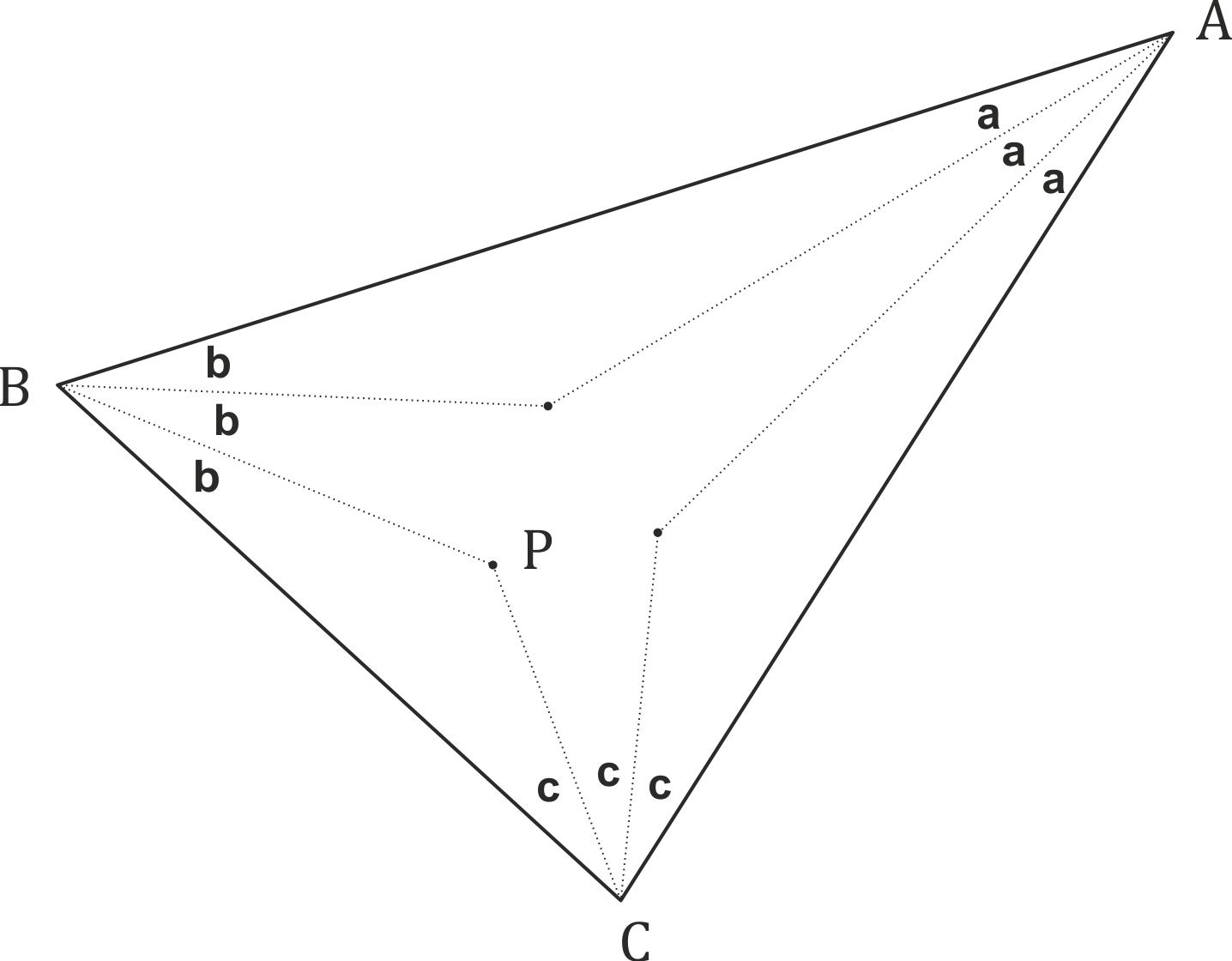
Theorem:
Let the trisectors of the three angles of a triangle ABC meet as shown in three points. Then the three points are the vertices of an equilateral triangle.
Proof:
1) Preliminary. As the angles of the triangle are 3a, 3b and 3c, it must be the case that 3a+3b+3c = π, therefore a+b+c = π/3. Let ancillary angles be defined as follows: ● = a+π/3; ◊ = b+π/3; ○ = c+π/3;
(Note that at most one of a, b and c can be greater than π/6, implying that at most one of ●, ◊ and ○ can be greater than π/2.)
2) Consider the triangle BPC. From the apex P draw a line to the base BC, making a triangle with angles b, ○, and ●, as shown. (Note that b+○+● = b+c+a+2π/3 = π by 1.) Call this triangle 'the first triangle':
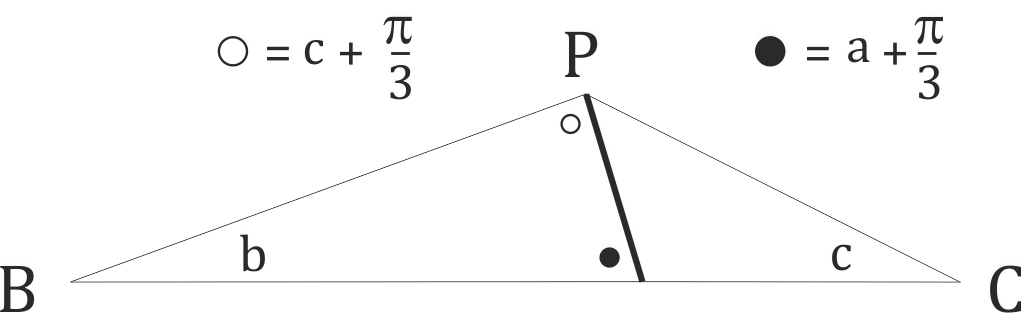
(and note that the diagram will look somewhat different if by any chance ● is greater than π/2).
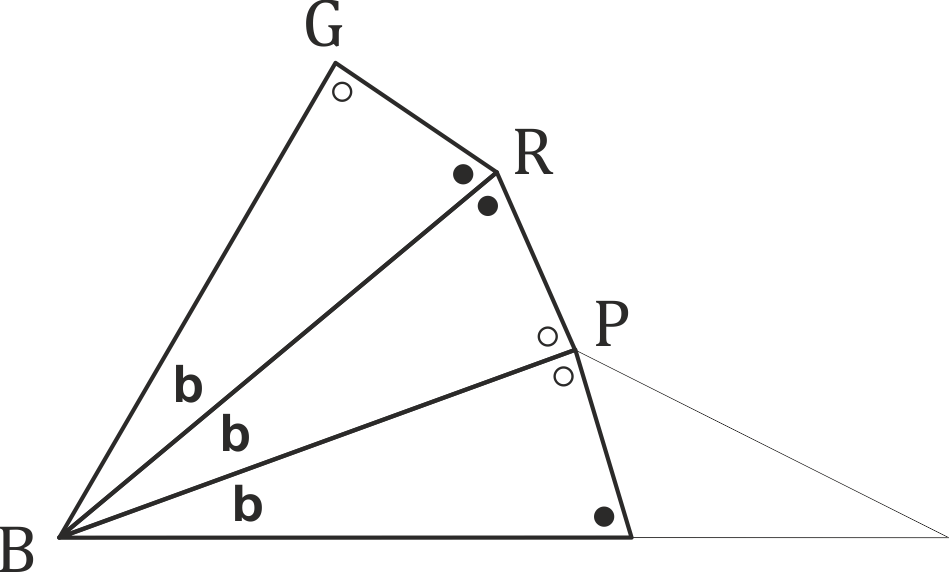
3) Reflect the first triangle in its top side BP, then reflect the new triangle in its top side BR:
4) Do the same on the other side, starting from a triangle with angles c, ◊ and ●. Call this triangle ‘the second triangle’.
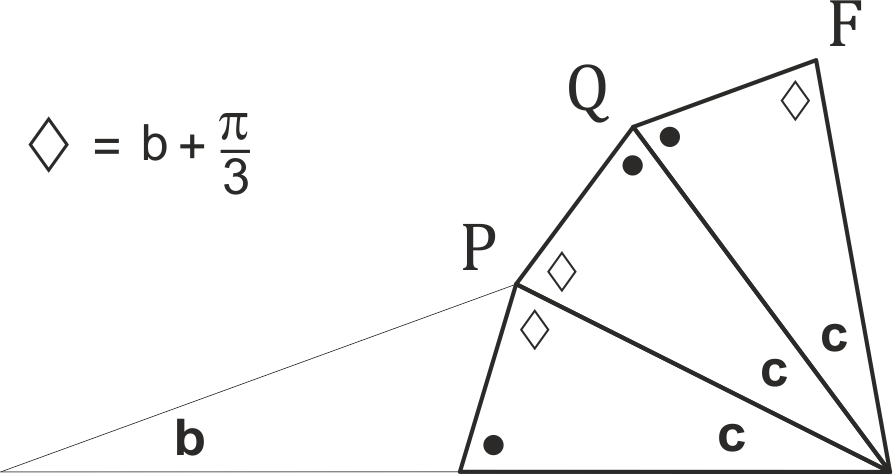
5) The short sides of the first triangle and the second triangle are equal: because they both descend from P to the base BC, and both make the same angle ● with the base. Therefore, all the thick lines in the following figure are of equal length; call it s.
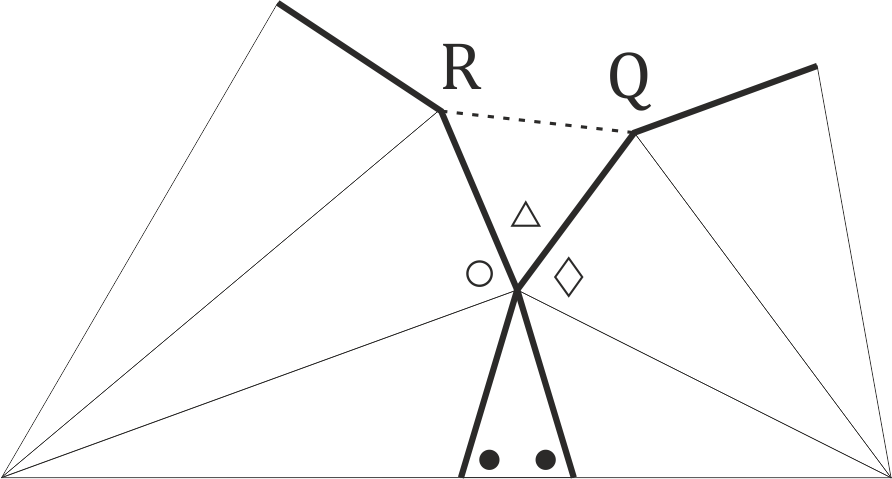
Moreover, the angle marked △ is π/3. For the angle at the apex P of BPC is π−b−c. Then △ = 2π−○− ◊−π+b+c = π−2π/3 = π/3. Therefore the dotted line RQ also has length s.
6) On RQ as base erect a triangle RQW with angles ◊ and ○ as shown. The third angle will be π−◊−○ = π/3−b−c = a.
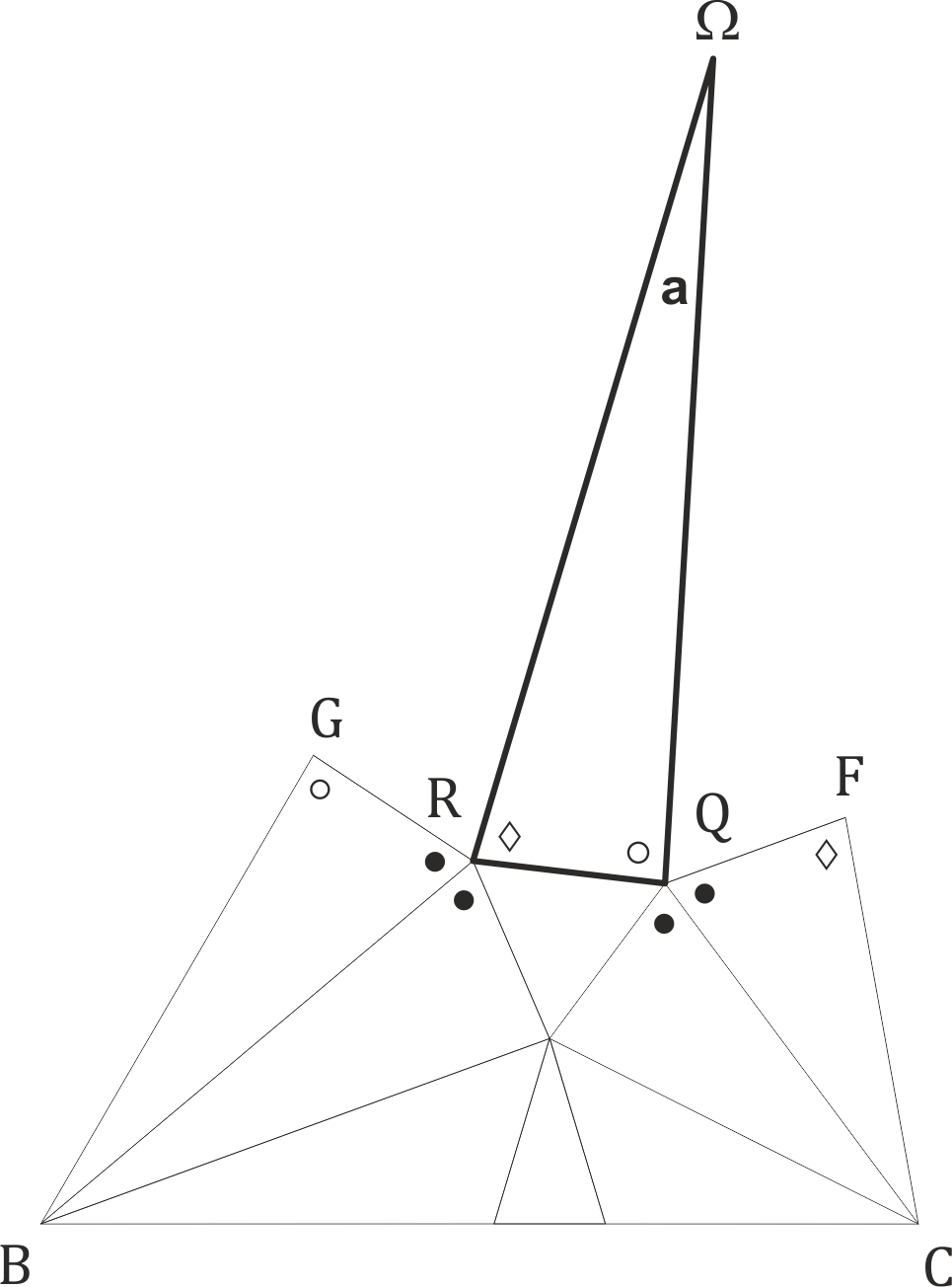
7) In the following, let us take the phrase ‘the line BG’ to mean the infinite line of which BG is a finite line segment; and similarly with the other lines.
We claim that the reflection of the line QΩ in the line RΩ is the line BG. Consider first the angle between lines RΩ and BG. We can obtain the second line from the first as follows. First, rotate the line RΩ about R, clockwise, through the angle ◊+π/3+●+●. At this point the line will coincide with the line RG. Then rotate it about G, clockwise, through angle ○, so that is coincides with BG. The total angle of rotation is ◊+π/3+●+●+○ = 5π/3+b+a+a+c = 2π+a. Therefore the angle made by BG to RΩ is a. (The extra 2π is immaterial.) Therefore BG and QΩ make the same angle to RΩ.
Consider, secondly, the perpendicular distances of R from the lines BG and QΩ, respectively. As RG and RQ have the same length s, and make the same angle ○ with BG and QΩ, respectively, the perpendicular distances are the same. Therefore BG and QΩ are images in the line RΩ and all three lines must be concurrent.
8) The same on the other side: CF, QΩ and RΩ must be concurrent.
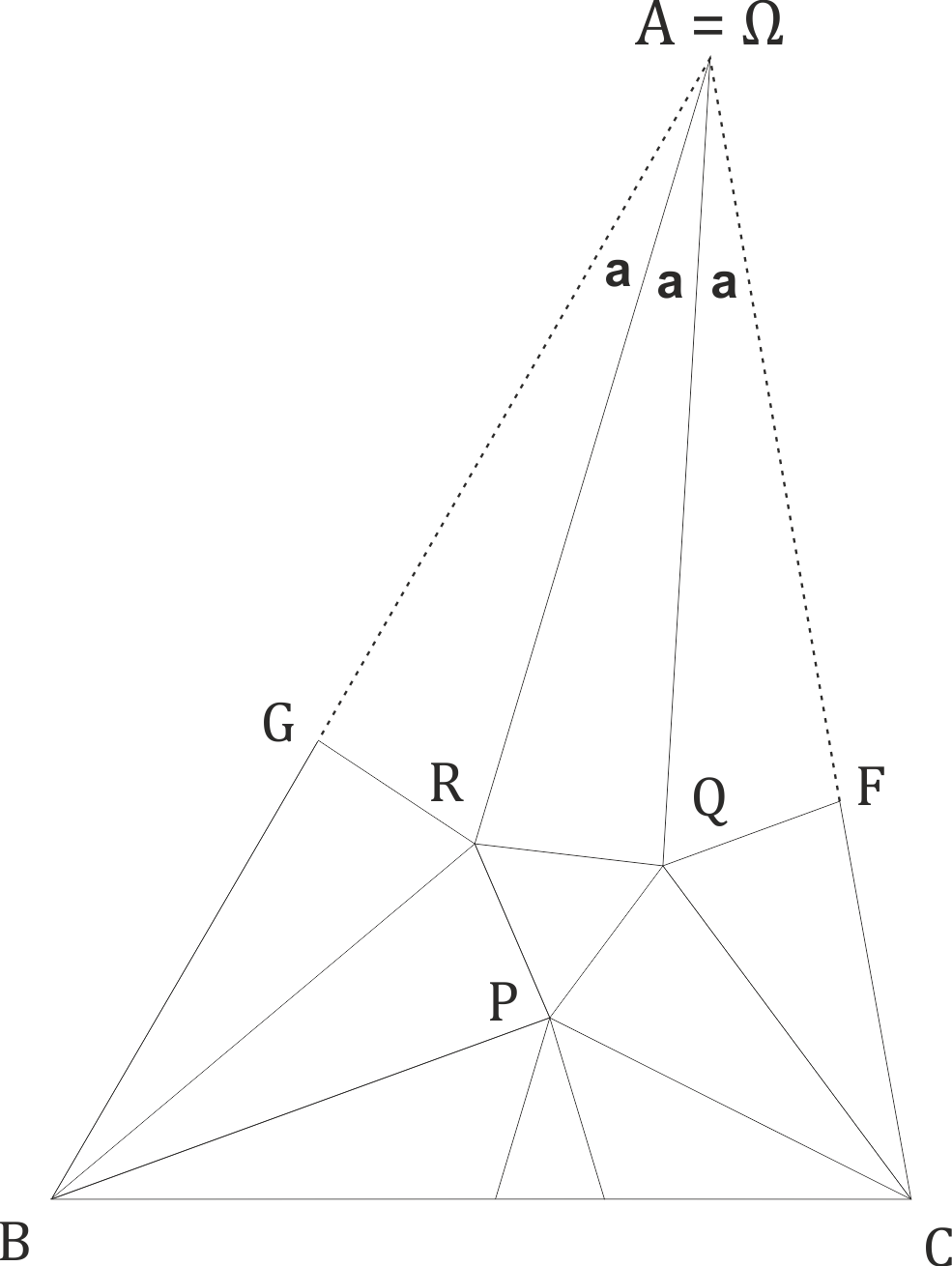
9) As both BG and CF pass through Ω, this must be their point of intersection, or meet. But the meet of BG and CF is also A, the third vertex of the original triangle, because these two lines make the correct angles (3b and 3c, respectively) with the base BC. Therefore Ω and A are the same point. Therefore P, Q and R are the three meets of the trisectors. But the sides of the triangle PQR are already known to be equal; therefore, the three meets of the trisectors are indeed the vertices of an equilateral triangle.
Q.E.D.
An alternative ending
There is another way the proof can end, although it strays from the theme of 'reflection', so that in that respect, at least, it is less good. The first 5 steps are as before, it is only at steps 6 and 7 that the new story diverges. Suppose we have got as far as the diagram in step 5, which we now redraw with some more angles and labels put in:
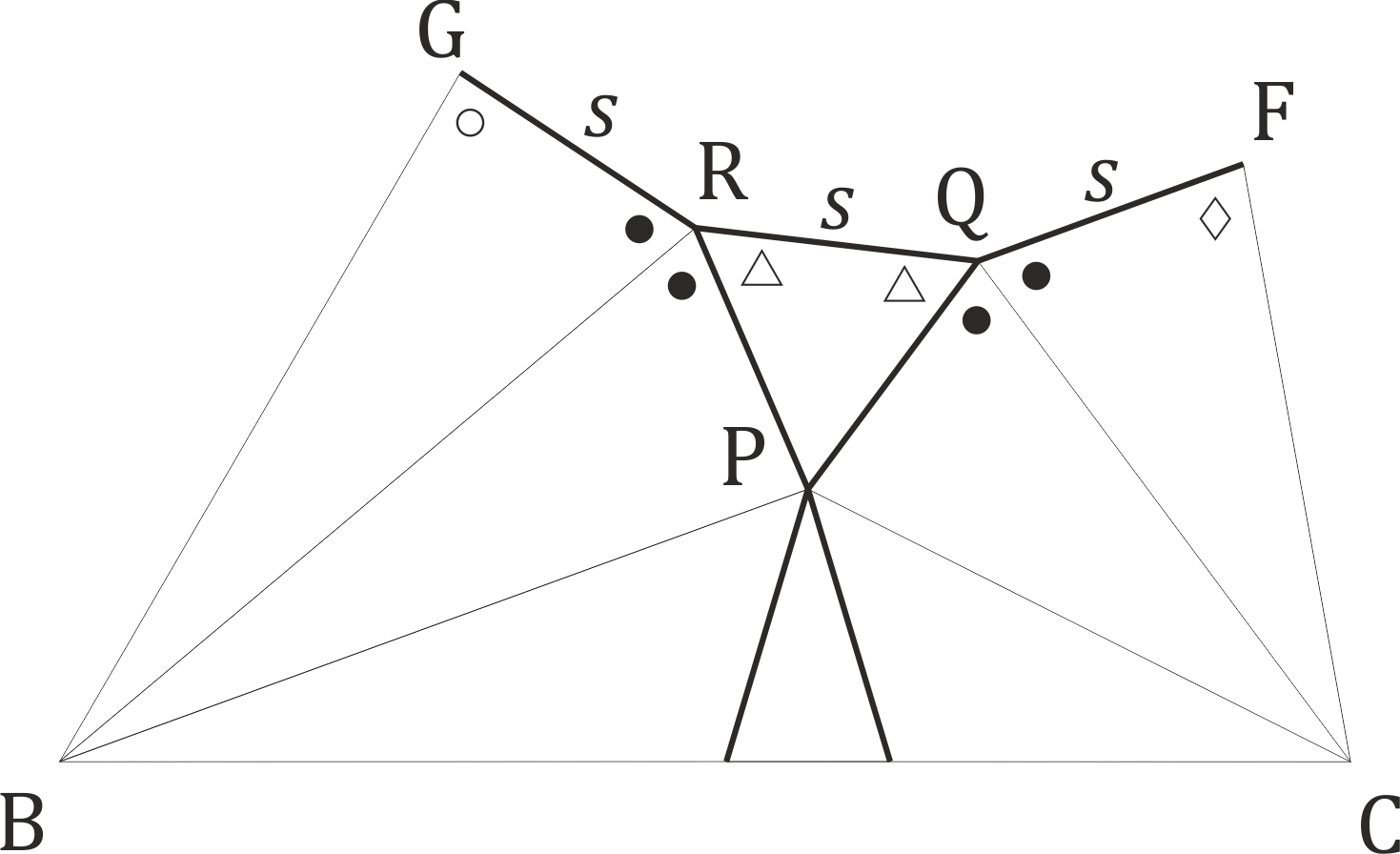
We note that the angles ∠GRQ and ∠RQF are equal, both being equal to 2π-●-●-△ = π-2a. Together with the fact that GR, RQ, and QF are equal in length, this implies that a circle can be drawn through the four points G, R, Q and F.
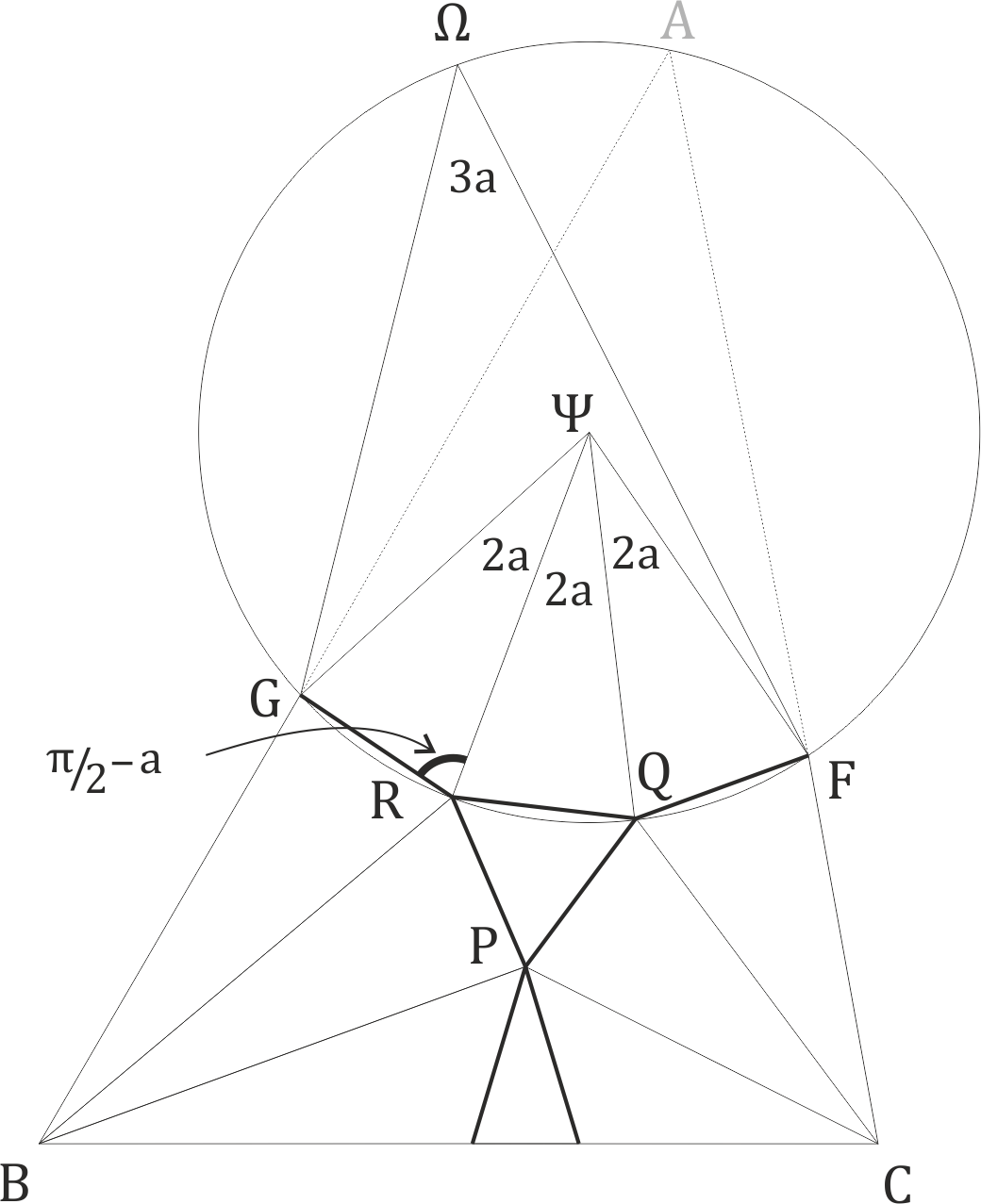
Let the centre of the circle be Ψ. Then each of the angles at the base of the isoceles triangle ΨGR is π/2-a, implying that the angle at the apex is 2a; and the same goes for the triangles ΨRQ and ΨQF.
Therefore, the angle subtended by the line segment GF at Ψ is 6a; and the angle subtended by GF at Ω, where Ω is any point on the major arc GF of the circle (that is, not the minor arc that goes through R and Q), must be half of this, namely 3a. We may add that the angle subtended will be less than 3a if Ω is outside the said circle, and greater than 3a if it is inside.
But the third vertex A of the originally given triangle lies at the intersection of BG and CF. Therefore the angle subtended by GF at A must be equal to ∠BAC, namely 3a. Therefore A must lie on the major arc GF.
Now each of the segments GR, RQ, QF subtends angle 2a at the centre of the circle, and will therefore subtend angle a at any point, such as A, on the circumference. Therefore AR and AQ are trisectors of ∠BAC, and the theorem is proved.
© George Burnett-Stuart 2024, 2026. (The latter is the date of revisions to the original proof, and the addition of the alternative ending.)
This proof is closely based on J.H.Conway's well-known proof: see the web page on Morley's Theorem at cut-the-knot.org . There Conway's proof is described as a 'backwards' proof because it starts from an equilateral triangle and shows how to construct a triangle with angles 3a, 3b and 3c that is similar to the given triangle ABC. My idea was to turn the proof into a 'forwards' proof, starting from the given triangle.
For an account of Conway's proof from the horse's mouth see this note by Conway.